Wyndham · Wyndham Vale 3024
Underpinning & foundation repair in Wyndham Vale
Wyndham Vale's foundation problems are drainage problems more often than anywhere else we work. The ground is flat, the clay is reactive, and there is very little natural fall to carry water away — so when rain arrives, it sits, and where it sits against a slab it eventually shows up in the brickwork.
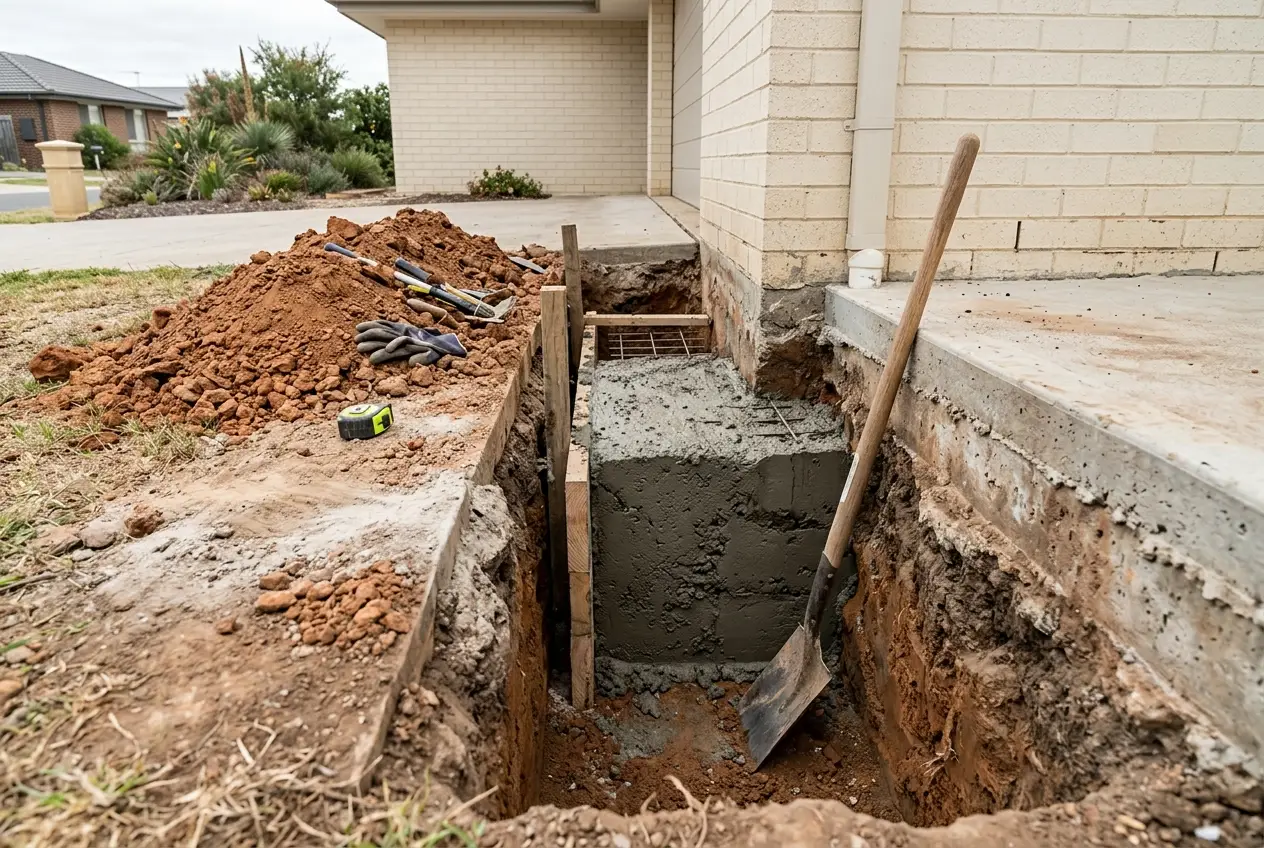
Wyndham Vale housing — what we are usually dealing with
Wyndham Vale mixes 1990s housing around the older established pockets with a large body of 2000s and 2010s estate development spreading toward Manor Lakes. The bulk is single and double-storey brick veneer on slab-on-ground. The newer estates were built to current standards, but they were built flat and dense, with shallow drainage falls and compact lots. Two-storey homes on these sites are worth extra attention: higher loads and taller wall panels mean the same amount of differential ground movement produces longer, more visible cracking than it would on a single-storey house next door.
The ground under Wyndham Vale
This is Werribee plains clay — moderately to highly reactive, with alluvial influence on the lower ground and near the creek lines. The distinguishing feature is not the clay itself but the topography sitting on it. The land is very flat, so surface drainage has minimal gradient to work with, stormwater moves slowly, and after heavy rain water can pond against slab edges for extended periods. Reactive clay plus persistent standing water at the perimeter is the classic recipe for edge heave.
What this means for your job
In Wyndham Vale, we look at where the water goes before we look at anything else. Downpipes discharging to the surface instead of into stormwater, garden beds built up above the slab edge, paving laid with fall back toward the house, and blocked or undersized stormwater connections account for a large share of what we assess. That is genuinely good news for homeowners, because a drainage correction runs a few thousand dollars against tens of thousands for piers. Where movement has become progressive and permanent, underpinning is warranted — but on this ground the moisture source has to be fixed first regardless, or the same movement resumes under new piers.
What we see in Wyndham Vale homes
- Water ponding against the house or slab edge after heavy rain
- Cracking that appeared or worsened after a very wet winter rather than a dry summer
- Garden beds or paving sitting level with or above the slab edge
- Cracking noticeably wider on the upper storey of a two-storey home
- Damp or persistently dark patches along one section of the slab edge
Underpinning costs in Wyndham Vale
$14,000 – $31,000 for typical underpinningPiers typically run $1,600 to $2,900 each. Before that, budget a few hundred dollars for a proper drainage assessment and, where warranted, a CCTV drain inspection — in Wyndham Vale that step regularly identifies a fixable cause and changes the scope substantially.
Indicative range only, based on typical jobs in this area. Access, soil conditions and the extent of movement change the number — a fixed price follows an on-site inspection.
The right service for Wyndham Vale
Wyndham Vale is a slab-on-ground suburb, so there are no stumps to replace here — the service that applies is underpinning and foundation repair. Anyone offering you "restumping in Wyndham Vale" has not looked at what your house is built on. See how we assess slab movement, and how heave differs from settlement, on our underpinning page.
Underpinning in Wyndham Vale — your questions
Water pools next to my Wyndham Vale house — is that causing the cracking?
It is one of the most likely causes here, and it is the cheapest to fix. Wyndham Vale is flat with shallow drainage falls, so water that cannot get away sits against the slab edge and keeps that strip of clay permanently wetter than the soil under the centre of the house. Reactive clay swells when wet, so that edge lifts relative to the rest of the slab and the brickwork above cracks to accommodate it. Correcting the fall, extending downpipes into stormwater and lowering built-up garden beds costs a fraction of underpinning and resolves a meaningful share of cases.
Should I fix the drainage before underpinning?
Yes, essentially always on this ground. Installing piers while an active moisture source keeps swelling or softening the clay around them means paying for a permanent solution to a problem that is still being caused. The correct sequence is: identify and correct the water source, allow the soil to re-equilibrate, monitor floor levels across a wet and a dry season, then underpin only the sections showing genuine permanent displacement. Any contractor who wants to pier a Wyndham Vale home without first looking at where the stormwater goes is skipping the step that decides whether the work is even needed.
Is cracking worse in double-storey homes in Wyndham Vale?
It presents more dramatically. A two-storey home puts higher loads on the same slab and has taller wall panels, so identical ground movement produces longer and wider visible cracks, often more pronounced upstairs than at ground level. It does not necessarily mean the underlying movement is more severe than a neighbouring single-storey house — but the repair scope tends to be larger, so it is worth assessing earlier rather than watching it through another season.
We also work near Wyndham Vale
Worth reading next: Reactive clay in Melbourne's west, explained