Service · Masonry repair
Brick repairs & repointing in Melbourne
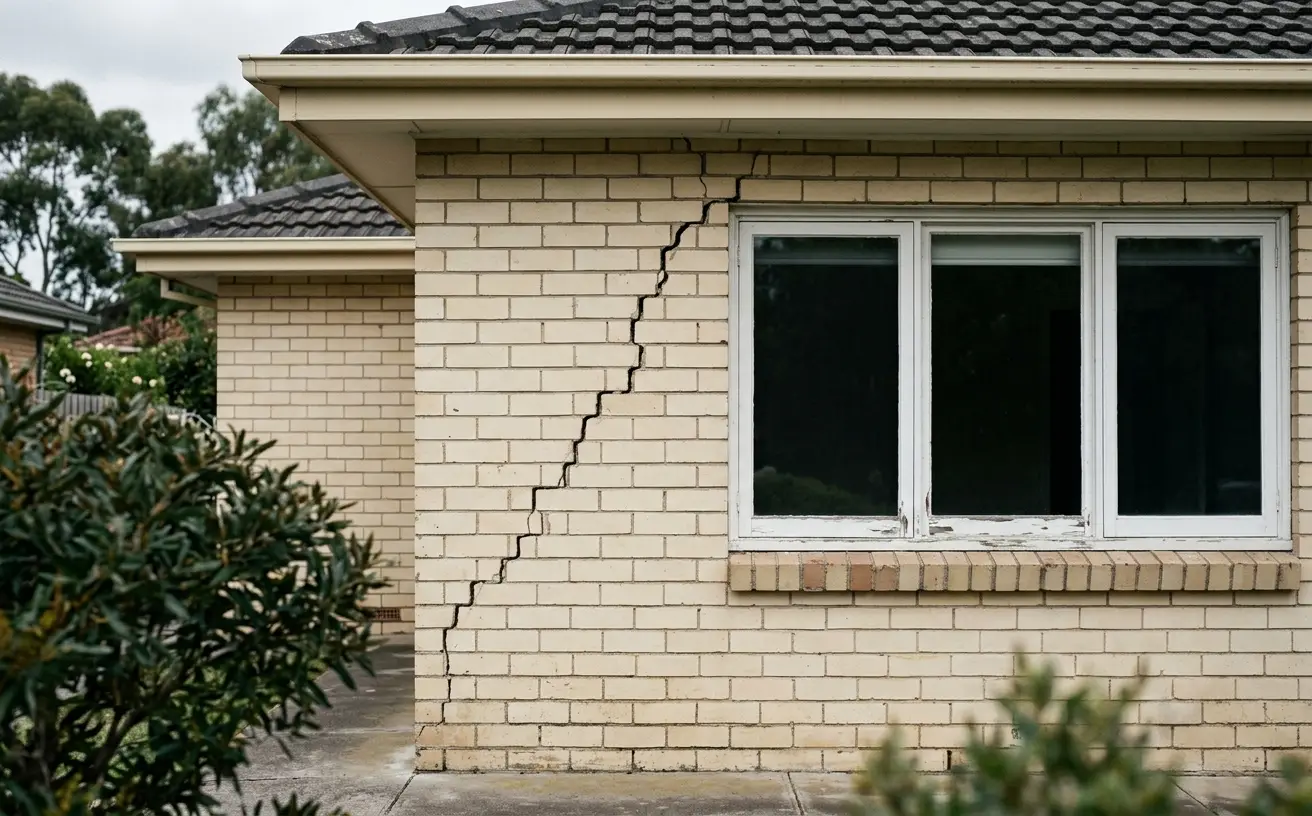
Brickwork repair is the last step in a foundation job, not the first. Fill a structural crack in a house that is still moving and it reopens within a season — which is why the most useful thing we do on this service is often to tell someone to wait.
The sequence that matters
- Diagnose the movement. Floor levels, crack mapping, drainage check. A crack is evidence, not the problem.
- Stop or stabilise it. Drainage correction, underpinning, restumping — whatever the diagnosis calls for.
- Confirm it has stopped. Mark and date the cracks, re-measure across a change of season. This step gets skipped constantly and it is the one that protects the repair.
- Then repair the masonry. Stitch, piece in, repoint, make good.
If a crack is letting water into the building, a temporary weather seal in the meantime is sensible. That is a holding measure, not the repair.
What we do
- Crack stitching. Helical stainless bars bonded into the mortar joints across a structural crack, restoring tensile continuity so the wall acts as one piece again. Invisible once repointed.
- Piecing-in damaged bricks. Cutting out spalled, blown or cracked bricks and replacing them with matched or reclaimed units.
- Repointing. Raking out perished mortar and repointing in a mix matched to the original — lime-based on pre-war solid brickwork, matched joint profile throughout.
- Rebuilding sections. Where masonry has lost bond and cannot be stitched — a corner, a parapet, a section above an opening.
- Lintel replacement. Corroded steel lintels above windows and doors expand as they rust and lift the brickwork above, producing a distinctive horizontal crack line at lintel height.
- Remedial wall ties where the outer skin has lost restraint — see leaning & bowing walls.
The lime mortar point, because it matters here
Melbourne has a great deal of pre-war solid brickwork built with lime mortar, and the single most common way that brickwork gets damaged is by being repointed in a hard modern cement mix. Lime mortar is deliberately softer and more permeable than the brick: it lets moisture evaporate out through the joints, and it accommodates small movements by cracking sacrificially rather than transferring stress into the bricks.
Point that wall in cement and you invert the design. Moisture and movement are forced through the bricks instead, and the brick faces spall and blow — damage that is permanent and far more expensive than the repointing was. On period solid brickwork, a lime-based mix matched to the original is the correct specification, and it is worth asking any quote to state it explicitly.
What brick repairs cost in Melbourne
$800 – $3,000 crack stitching · $80 – $160 per m² repointingCrack stitching a single structural crack commonly runs $800 to $3,000 depending on length and access. Repointing is priced by area, typically $80 to $160 per square metre, with lime work and heritage joint profiles at the upper end and scaffolding priced separately on upper storeys. Piecing-in individual bricks is usually charged by the hour plus materials, and matched reclaimed bricks can cost more than new ones.
Indicative range only, based on typical jobs in this area. Access, soil conditions and the extent of movement change the number — a fixed price follows an on-site inspection.
Repair now, or wait?
Two straightforward tests before you spend anything on masonry:
- Is the crack still moving? Mark each end with a pencil and the date, measure the width, and look again in three months across a change of season. A crack that has not changed is ready to repair. One that has widened is not.
- Is there anything else going on? Sticking doors, sloping floors, cracked cornices or cracked floor tiles alongside the brickwork mean the structure is moving and masonry repair is premature.
If both come back clean, the brickwork is a cosmetic and weathering job and can be done on its own. If either does not, start at reading the cracksand get the cause diagnosed first.
Brick repair questions, answered properly
Should I repair the cracks before or after fixing the foundation?
After, essentially always. Brickwork repair is the last step, not the first. If the ground under the house is still moving, a stitched or repointed crack will simply reopen — usually within a season or two — and you will have paid twice. The correct order is: diagnose the movement, stop or stabilise it, allow a period to confirm it has stopped, then repair the masonry. The only exception is where a crack is admitting water into the building, in which case a temporary weather seal is sensible while the structural question is resolved.
What is crack stitching and when is it used?
Crack stitching bonds helical stainless steel bars into the horizontal mortar joints across a crack, using a thixotropic grout, so the masonry regains tensile continuity across the break. The bars are hidden inside the joints, so once repointed the repair is invisible. It is used where a structural crack has broken the continuity of the brickwork and the wall needs to act as one piece again — typically stair-step cracking from settlement or heave, once the movement has been dealt with. It is not a substitute for fixing the cause; it restores the wall after the cause is fixed.
How do I know if my brickwork needs repointing?
Run a key or a screwdriver along a mortar joint. If the mortar is sound it will resist; if it crumbles, powders or you can rake it out to any depth, the pointing has perished. Other signs are mortar visibly recessed behind the brick face, joints that have washed out on weather-exposed elevations, sand collecting at the base of the wall, and damp appearing internally on a wall with open joints. Perished pointing matters beyond appearance — open joints let water into the wall, and water in the wall is what corrodes wall ties and drives frost and salt damage.
Why should old lime mortar not be repointed with modern cement?
Because cement mortar is harder and less permeable than the bricks around it, and in a solid-brick wall built with lime mortar that reverses how the wall is designed to work. Lime mortar is intentionally the sacrificial, softer element: it lets moisture evaporate out through the joints and it accommodates small movements without cracking the bricks. Point that wall in a hard cement mix and the moisture and the movement are forced through the bricks instead, so the brick faces spall and blow. On pre-war solid brickwork — most of Melbourne's period housing — a lime-based mix matched to the original is the correct specification, and it is worth insisting on.
Can individual damaged bricks be replaced?
Yes, and it is routine. Individual spalled, cracked or blown bricks are cut out and replaced with matched bricks in a process called piecing-in. The technical part is the match rather than the work: Melbourne has an enormous range of historical brick types, colours and sizes, and a bad match is more visually obvious than the damage was. Reclaimed bricks of the right era are usually the answer on period housing. On a large area, a bricklayer will sometimes take bricks from a hidden elevation to patch a visible one and use new bricks where they will not be seen.
Will the repaired brickwork match the rest of the wall?
Fresh mortar will always be slightly different from mortar that has weathered for eighty years, and any tradesperson who promises an invisible match is overselling. What good work does is get close enough that it stops reading as a repair: matching the mix colour and the sand, matching the joint profile — struck, raked, flush or ironed — and matching the joint width. Those three things matter more than the mortar colour on day one, because the colour blends over a couple of seasons and a wrong joint profile never stops looking wrong.
Related:Wall cracks: when to worry ·Leaning & bowing walls ·Underpinning & foundation repair