Eastern Suburbs · Box Hill 3128
Restumping in Box Hill
Box Hill is being rebuilt around its remaining period houses, and that context changes the advice. A lot of the weatherboards here are on land zoned for something considerably taller, which makes the honest first question not how much a restump costs, but whether this particular house should have one at all.
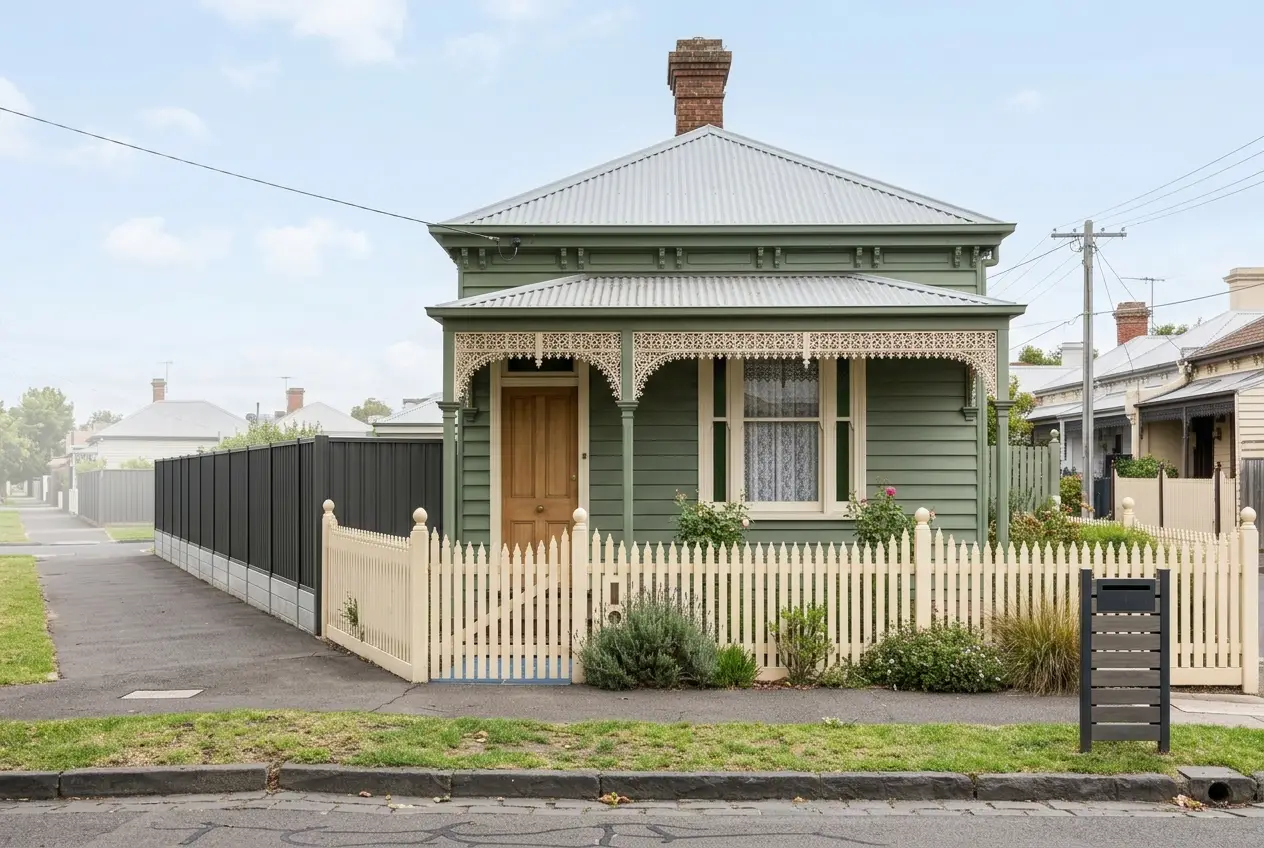
Box Hill housing — what we are usually dealing with
Box Hill's older stock is interwar bungalow through post-war weatherboard and brick veneer, largely 1920s to the mid-1960s, all with suspended timber floors on stumps. The post-war houses dominate: modest three-bedroom footprints, 30 to 45 stumps, originally timber with early concrete appearing through the later builds. Away from the centre, in the quieter streets toward Box Hill South and Mont Albert, that stock is still largely intact and is being renovated rather than replaced — which is where restumping genuinely pays for itself, because it is the correct first step before anything else is spent.
The ground under Box Hill
Box Hill sits on Silurian siltstone and mudstone weathering to a clayey silt of moderate reactivity — the standard eastern-suburbs profile. It is not the highly reactive basalt clay of the western plain, so slab heave is not the local failure mode. What does matter here is trees. Box Hill's established streets carry substantial mature eucalypts and exotics, and a large tree drawing moisture from clay within its root zone through a dry summer will shrink the soil under the nearest corner of a house. On the sloping ground toward Koonung Creek, old cut-and-fill sites add a second contributor.
What this means for your job
The Box Hill conversation almost always splits into two. If the house is a long-term home or is being renovated, restumping first is the right sequence and everything else follows from it. If the block is a redevelopment candidate — and a great many are — then a full restump is capital that will be demolished, and targeted replacement of the genuinely failed stumps to make the house safe and rentable is the sensible spend. We will tell you which category we think you are in, and we would rather quote the smaller job when that is the honest answer. Access is generally good: post-war blocks here are wide enough for a machine.
What we see in Box Hill homes
- A dropped corner nearest a large established tree, worst at the end of summer
- Floors that feel worse in February than in August
- Doors catching seasonally and then freeing up again
- Early concrete stumps with rust staining and flaking near the top
Restumping costs in Box Hill
$11,000 – $20,000 for a full restumpBox Hill sits at the affordable end because post-war footprints are modest and the wide blocks allow machine-dug footings. Targeted repairs — a handful of failed stumps to make a house safe without a full re-level — commonly run $2,000 to $5,000 and are frequently the right answer on a redevelopment block. Where seasonal tree-driven movement is the cause, the level survey needs to establish whether it is settling permanently or simply moving back and forth.
Indicative range only, based on typical jobs in this area. Access, soil conditions and the extent of movement change the number — a fixed price follows an on-site inspection.
The right service for Box Hill
Box Hill homes of this era have suspended timber floors on individual stumps, so restumping and reblocking is the service that applies — replacing failed stumps and re-levelling the floors above them. Read what the full job involves, including permits and the lifting process, on our restumping page.
Restumping in Box Hill — your questions
My Box Hill block might be developed — should I restump anyway?
Usually not the full job. If the house is likely to come down within a few years, a $15,000 restump is money that ends up in a skip. What is worth doing is replacing the stumps that have genuinely failed so the house stays safe and tenantable — commonly $2,000 to $5,000 rather than five figures. The calculation flips if you are selling to an owner-occupier or renovating to stay, because a completed restump with a permit and final certificate removes a real objection at sale and is the correct first step before any renovation spend.
Is the tree in my yard causing the movement?
It may well be contributing, and the tell is seasonality. Tree-driven movement on clay is worst at the end of summer when the tree has drawn the soil dry, and partly recovers through winter as the clay rehydrates — so doors that stick in February and free up in August point at moisture rather than at stump failure, which is one-way and permanent. Distinguishing them matters, because a house moving seasonally may need drainage and root management rather than a restump. Removing the tree is not an automatic fix either: the soil then swells back and the house can move again the other way.
My floors feel worse in summer — does that mean it's not the stumps?
It is a strong hint. Stump failure is a one-way, permanent drop: rot and settlement do not reverse, so a house on failed stumps does not get better in winter. Movement that comes and goes with the seasons is the ground responding to moisture, which on Box Hill's clay usually means a tree, a drainage issue, or both. That does not mean the stumps are fine — plenty of houses have both problems — but it does mean a level survey taken at one point in time needs to be read alongside the seasonal history rather than on its own.
We also work near Box Hill
Worth reading next: 7 signs your house needs restumping