Inner East · Surrey Hills 3127
Restumping in Surrey Hills
Surrey Hills is a genuinely hilly suburb with a genuinely uniform housing stock — Federation and interwar homes on ground that falls away, often noticeably, across a single block. That combination means the question here is rarely whether the floor is out of level, but whether it ever was level to begin with.
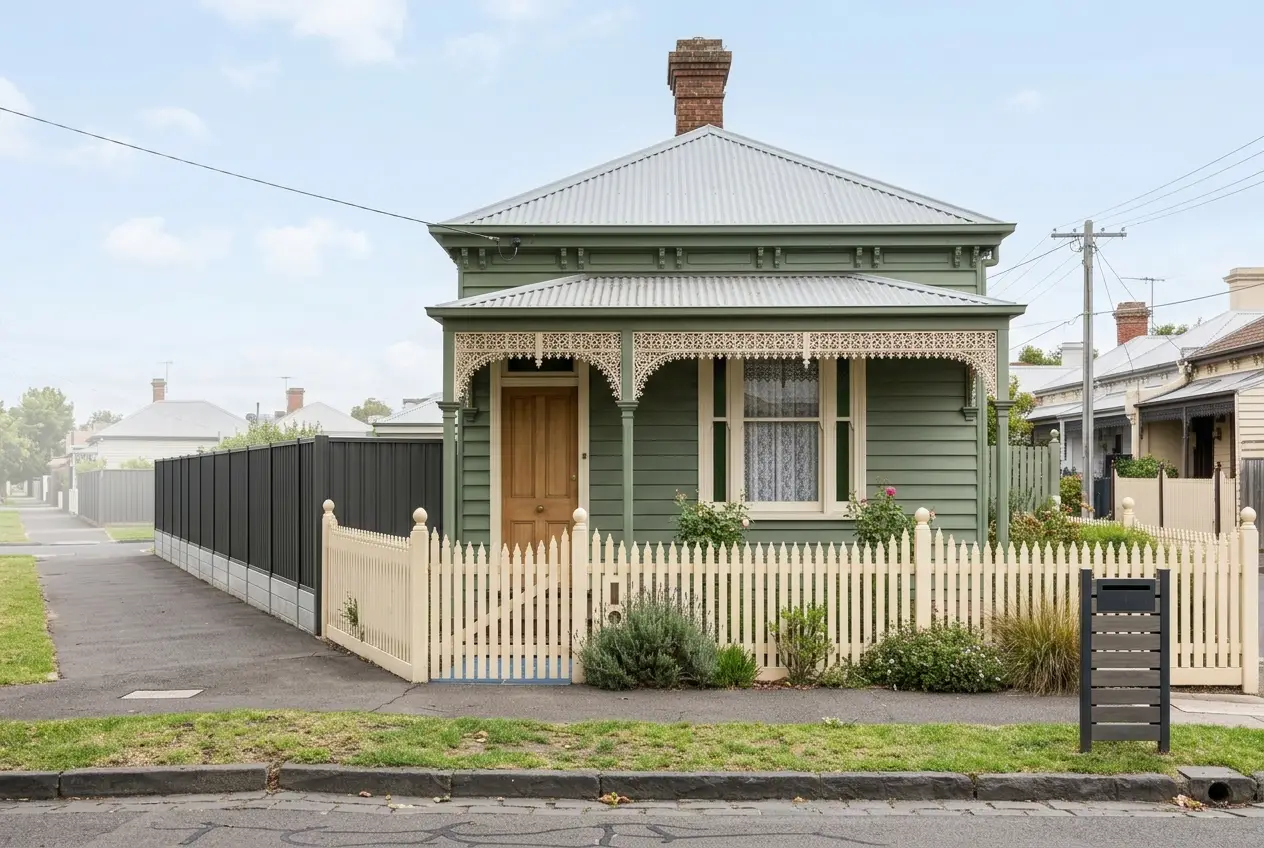
Surrey Hills housing — what we are usually dealing with
The suburb is dominated by Federation and Edwardian homes from roughly 1900 to 1920, followed by a solid layer of interwar bungalows through the 1920s and 1930s. Timber-framed, suspended floors, original timber stumps. Surrey Hills homes tend to be middle-sized rather than grand — smaller footprints than Kew, larger than the inner west — with a fairly consistent stump count in the 35 to 55 range that makes quoting here more predictable than in most of the inner east. Rear extensions from the 1990s and 2000s are extremely common and usually sit on modern concrete.
The ground under Surrey Hills
Surrey Hills sits on the Silurian siltstone and mudstone of the inner east, weathering into a clayey silt of moderate reactivity. The distinguishing feature is the topography — the name is accurate. Blocks fall, sometimes by more than a metre across the house footprint, and the pre-war response to that was to build up the low side on longer stumps rather than to cut and bench the site. A hundred years later, those longer stumps on the low side are carrying more load through a longer unsupported length, and they are the ones that go first.
What this means for your job
Because of the slope, the single most useful thing to establish in Surrey Hills is what the original floor level actually was. A house built on a falling block with a 30mm construction tolerance that has since settled a further 25mm is a different conversation to one that has dropped 55mm from level, and only a proper level survey combined with a subfloor inspection separates them. Access is generally good — most blocks take a machine down one side — and subfloor height on the low side is often generous, which keeps the per-stump rate reasonable.
What we see in Surrey Hills homes
- A fall that runs consistently downhill rather than dipping in the middle
- Long stumps on the low side of the house showing rot or splitting at ground line
- Doors on the downhill end of the hallway catching at the top corner
- A newer rear extension sitting visibly proud of the original floor level
Restumping costs in Surrey Hills
$13,000 – $24,000 for a full restumpSurrey Hills is one of the more predictable suburbs to price because the housing stock is so uniform — most jobs land in a narrower band than the inner east average. What moves it is the fall across the block, which drives footing depth on the low side, and whether a rear extension is included or excluded. Machine access on most blocks keeps the per-stump rate below inner-west equivalents.
Indicative range only, based on typical jobs in this area. Access, soil conditions and the extent of movement change the number — a fixed price follows an on-site inspection.
The right service for Surrey Hills
Surrey Hills homes of this era have suspended timber floors on individual stumps, so restumping and reblocking is the service that applies — replacing failed stumps and re-levelling the floors above them. Read what the full job involves, including permits and the lifting process, on our restumping page.
Restumping in Surrey Hills — your questions
My Surrey Hills floor slopes — was it built that way?
On a Surrey Hills block, this is a real possibility and worth establishing before you spend anything. Homes on falling ground were commonly built with a construction tolerance that reads today as a slight slope, and pre-war building was not carried out to modern flatness standards. A floor level survey mapped against the subfloor tells you whether the slope corresponds to failed stumps, which is a repair, or is simply how the house was set out, which may not need touching at all. We would rather tell you it is original than sell you a restump.
Do the long stumps on the low side need to be replaced differently?
They need to be designed rather than simply matched. A tall stump carries the same load over a longer unsupported length, so it needs adequate section and a properly sized footing, and on a falling block the footing depth on the low side is often greater than on the high side to reach the same competent ground. Replacing a 1.2-metre stump with an identical 1.2-metre stump in the same shallow hole repeats the original design and gets you the same result in due course.
How long does a Surrey Hills restump take?
Typically one to two weeks on site for a full restump of a Federation home, plus two to four weeks beforehand for the building permit and surveyor inspections. Good machine access on most Surrey Hills blocks keeps the digging phase short. The lift itself should be spread over several days regardless of how fast the digging goes, because raising a hundred-year-old house quickly is what cracks the plaster.
We also work near Surrey Hills
Worth reading next: 7 signs your house needs restumping